Choosing a family gift becomes easier when you stop asking, “What product should I buy?” and start with a different question: What is distinctive about this relationship?
A gift from children to their parents carries a different story from one between siblings. A grandparent gift may centre on generations and family history, while a gift for a couple may need to feel relevant to two people and the home or life they share.
That difference gives you a useful starting point. Instead of adding a name to the first customizable object you find, choose the personal detail first and let it guide the gift.
If you are still deciding where to begin across the wider topic, the family gift discovery guide can help you step back before narrowing the choice by relationship.
Start with the relationship, not the product
Personalization works best when the detail you add already means something to the recipient.
That detail could be a name, but it does not have to be. It might be the way a child addresses a grandparent, a date that marks a shared milestone, a family phrase, a place connected to a memory, or an inside joke only two siblings understand.
Before looking at gift formats, ask three simple questions:
- What do these people share?
- What would the recipient recognize immediately?
- Is that detail warm, useful, funny, nostalgic or celebratory in a way that suits this relationship?
Those answers give you a stronger starting point than a generic search for “family gifts.”
A relationship-first approach also helps prevent over-personalization. If one short phrase captures the connection, adding six more details may make the design busier without making the gift more meaningful.
A four-step way to narrow your gift choice
You can use the same method for almost any family relationship.
1. Identify the relationship you are celebrating
Be specific.
“Family” is broad. “A birthday gift from adult children to their parents” is easier to work with. So is “a Christmas gift from grandchildren to Grandpa” or “a housewarming present for a couple moving into their first shared home.”
The clearer the relationship, the easier it becomes to choose a meaningful direction.
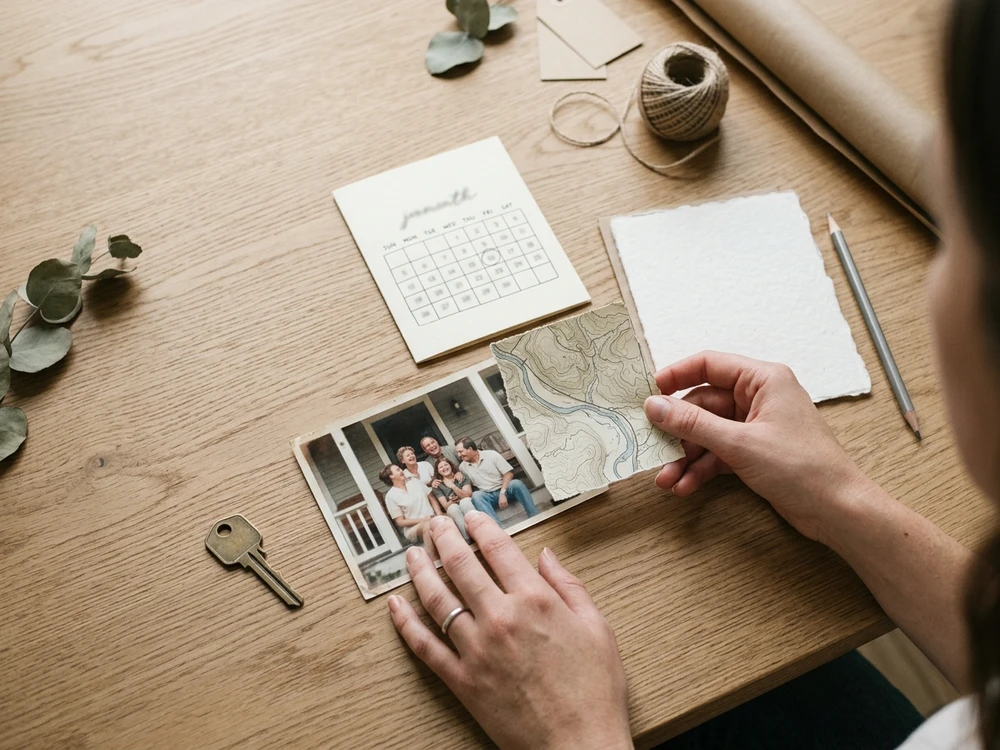
2. Find the strongest shared signal
Look for something that belongs naturally to the people involved.
It might be:
- a shared memory;
- a name or family role;
- a date;
- a meaningful place;
- a phrase or inside joke;
- a photograph;
- a household tradition;
- a hobby or routine they share.
You do not need all of these. One good signal is often enough.
3. Decide how personal the gift should feel
Some relationships suit an openly sentimental gift. Others feel more natural with humour, practicality or a subtle reference.
A sibling who trades jokes with you every week may respond better to a familiar phrase than a formal message about family bonds. Parents celebrating a major milestone may appreciate something more reflective. A couple’s gift may work best when it represents both people rather than favouring one partner.
Match the tone to the relationship as it actually exists.
4. Choose a format that supports the idea
Only now should the product format enter the decision.
A shared photograph may suit a display piece. A private joke may work better on something used casually. A significant date or place could fit a simple keepsake. A household-oriented gift may make sense when the recipients are a couple who share a home.
The format should carry the meaning, not compete with it.
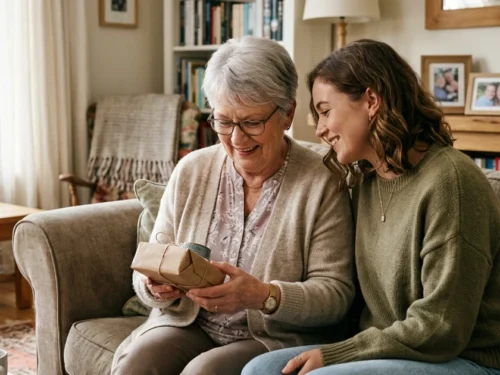
Family gift ideas from children to parents
When children give to parents, the strongest starting point is often recognition.
You are not simply giving something to “Mom and Dad,” “Mum and Dad,” or another parental pairing. You may be recognizing the family they built, the traditions they created, the support they gave, or a particular season of family life.
Personalization can therefore come from the children themselves: names, a short message, an important family date, a familiar phrase or a memory that the parents will recognize without explanation.
It is also worth deciding whether the gift is genuinely for both parents.
A shared household does not automatically mean identical taste. If the idea depends on a memory, image or display choice, consider whether both recipients will feel included. Sometimes one shared family gift makes sense; sometimes two more personal choices are better.
For a deeper guide focused specifically on this relationship, continue to Family Gift Ideas from Children to Parents.
Family gift ideas from grandchildren to grandparents
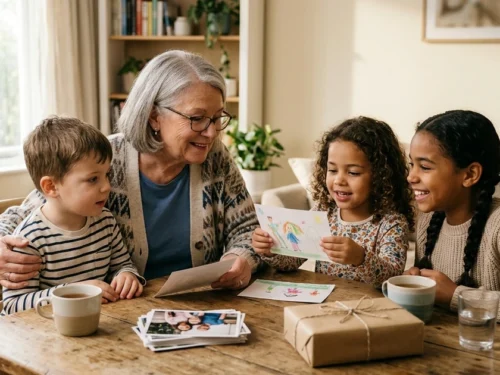
A grandparent gift often has an intergenerational dimension that changes what feels personal.
The meaningful detail may not be the object itself. It may be the evidence of the grandchildren at a particular stage: their names, a photograph, a drawing, the title they use for a grandparent, or a family memory that connects generations.
That can make even a simple idea feel specific.
For example, “Grandma” is a role. The name a particular family actually uses—whether that is Grandma, Nana, Granny, Nan or something unique to the household—can make the personalization more recognisable. The same applies to Grandpa, Grandad and other family names.
The key is to use the family’s real language rather than assuming a title.
You may also want to think about whether the gift is meant to be used, displayed or kept. That decision belongs to the recipient’s habits, not to a rule that all grandparent gifts must be sentimental keepsakes.
For a fuller relationship-specific guide, continue to Family Gift Ideas from Grandchildren to Grandparents.
Family gift ideas for brothers and sisters
Sibling gifts often have access to something other relationships do not: a private archive of shared history.
That might include childhood stories, family holidays, old nicknames, favourite films, repeated arguments that became jokes, or phrases that make no sense to anyone else.
Because of that, a sibling gift does not always need formal sentimental language to feel personal.
A short inside joke can say more than a long generic message. A reference to the place where you grew up may be more meaningful than simply printing “Best Brother” or “Best Sister” on an item. A childhood image can work when the recipient actually enjoys that kind of nostalgia.
The important question is tone.
Some siblings are openly affectionate. Others communicate through teasing. Some are close but prefer practical gifts. Choose a personal detail that sounds like your actual relationship rather than the way a sibling relationship is “supposed” to sound.
The dedicated guide Family Gift Ideas for Brothers and Sisters explores those choices in more depth.
Personalized gifts for couples who share a home
Buying for a couple creates a different problem: the gift has to make sense for two people.
A useful starting question is, What belongs to them together?
That could be a wedding or anniversary date, the place they met, their first shared home, a photograph, a trip, a family name, or a phrase linked to their life together.
A couple gift should also respect the fact that shared history does not automatically mean shared taste.
If the gift will be displayed in their home, consider whether its style feels suitable for both recipients and the space they share. If it is practical, ask whether both people are likely to use or enjoy it. If the personalization is romantic, make sure that tone suits the couple and your relationship with them.
Sometimes the most thoughtful choice is subtle: names and a date, a meaningful place, or one shared reference rather than an elaborate declaration.
For the narrower decision, see Personalized Gifts for Couples Who Share a Home.
The same gift idea can mean something different in each relationship
A product category does not carry one fixed meaning.
What changes the gift is the relationship-specific detail attached to it.
| Relationship | A strong starting signal | Personalization direction |
|---|---|---|
| Children → parents | Family history or appreciation | Children’s names, family date, shared memory or short message |
| Grandchildren → grandparents | Generations and family connection | Grandchildren’s names, family title, photograph or milestone |
| Siblings | Shared history and personality | Inside joke, nickname, childhood memory or familiar phrase |
| Couple | Shared life | Names, date, meaningful place, shared photo or household reference |
This is why choosing the product first can make the process harder. You may end up trying to force a relationship onto an item rather than choosing something that naturally carries the story.
Choose one personal detail before adding more
Personalized gifts can become less clear when every available field gets filled simply because it exists.
Start with the detail that does the most work.
If the relationship is about a shared memory, use the memory. If the recipient cares about family names, names may be enough. If one date explains the whole story, you may not need a paragraph of text beside it.
A useful test is:
If someone close to the recipient saw this detail, would they understand why it belongs to them?
If yes, you probably have a strong personalization direction.
If the answer is no, adding more decorative information may not solve the problem. Go back to the relationship and find something more specific.
If your main question is less about the recipient and more about emotional significance, the meaningful family gift ideas guide takes that broader decision further.
Match the relationship and the occasion
The relationship should lead the gift, but the occasion still affects tone.
A birthday can be more personal or playful. Christmas may encourage a family or household theme. An anniversary naturally brings dates and shared milestones into focus. A new-home gift may connect to place, household identity or a new chapter.
The occasion helps you decide what moment to highlight. It does not need to replace the relationship as the central idea.
For example, two siblings can exchange Christmas gifts without making the gift primarily about Christmas. The stronger idea may still be a shared joke or childhood memory, with the holiday simply providing the moment to give it.
Likewise, a couple’s anniversary gift becomes more meaningful when the date points back to something they actually value, rather than being added simply because dates are available.
Use the family’s own language
Not every family uses the same titles, roles or structure.
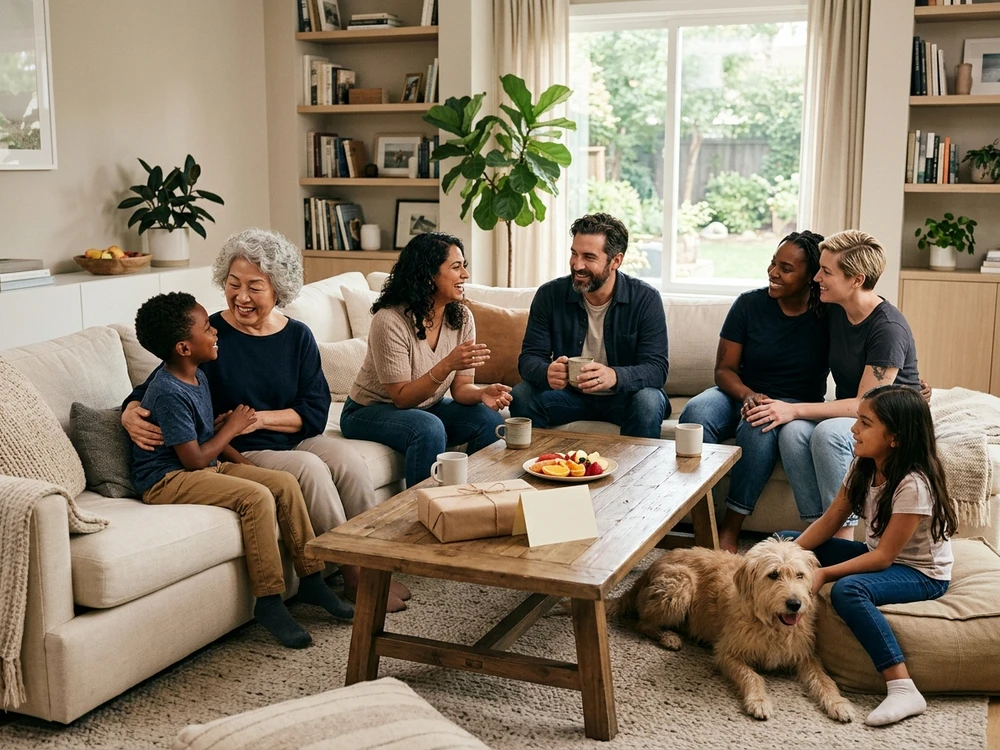
Some households have one parent. Some include step-parents, adoptive parents, grandparents as caregivers, same-sex parents or blended families. Some people consider close friends to be chosen family. Couples may or may not have children. Pets may be central members of a household.
A personalized family gift should reflect the people involved instead of forcing them into a standard template.
Use the names and roles they use for themselves.
If you are unsure whether a title, surname or family role is appropriate, choose a more neutral personalization cue such as first names, a date, a place or a shared phrase.
The goal is recognition: the recipient should see their relationship in the gift without having to translate someone else’s idea of what a family should look like.
Before you choose a specific personalized product
Once you have the relationship, tone and personal detail clear, you can evaluate actual products much more efficiently.
Check the current product information for:
- which personalization fields are supported;
- how names, dates, photos or messages will appear;
- whether the format suits the recipient’s home or routine;
- current size, material or care information where relevant;
- current processing and delivery information if timing matters;
- current return, correction or cancellation terms.
Those details vary by product and seller, so they should come from the current product or policy page rather than assumptions.
If your remaining question is mainly about affordability, practicality or where the gift will be used, continue to family gifts by budget and use case.
If you are choosing between formats or want a structured pre-order decision, use the family gift comparison guides instead.
FAQ
What makes a family gift feel personal?
A gift usually feels more personal when its key detail comes from the real relationship: a name, shared memory, date, place, phrase, photograph or family role the recipient immediately recognizes. Personalization does not need to be elaborate to be specific.
Should a family gift include every person’s name?
Not necessarily. Include everyone when the gift is genuinely about the whole family. If the gift celebrates one relationship—such as siblings or grandchildren and a grandparent—adding unrelated names may make the idea less focused.
Is a practical gift less meaningful than a keepsake?
No. A practical gift can still carry a personal connection, and a keepsake is not automatically meaningful. The better choice depends on the recipient, their routines and what you want the gift to represent.
What if my family does not use traditional titles?
Use the language your family actually uses. First names, nicknames, chosen roles, family phrases, dates or places can all help create a gift that reflects the relationship without forcing a conventional label.
Choose the relationship first, then the gift
A useful family gift does not need the most personalization. It needs the right personalization.
Start with the relationship. Identify the memory, role, routine, place or phrase that makes that relationship recognizable. Then choose a format that carries the detail naturally and fits the recipient’s real life.
From there, the next step is much easier: move into the guide for the relationship you are shopping for—parents, grandparents, siblings or a couple—and narrow the choice from there.