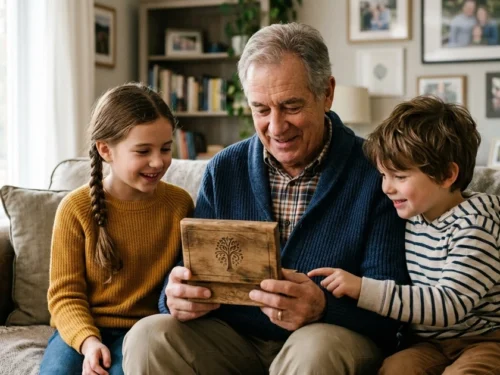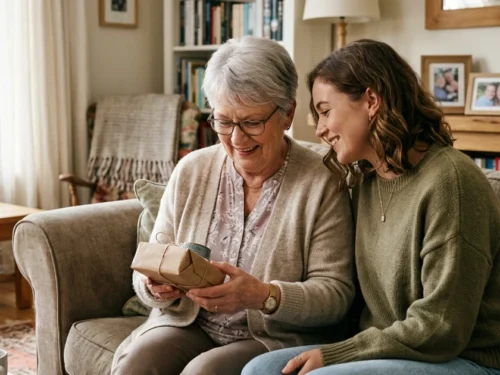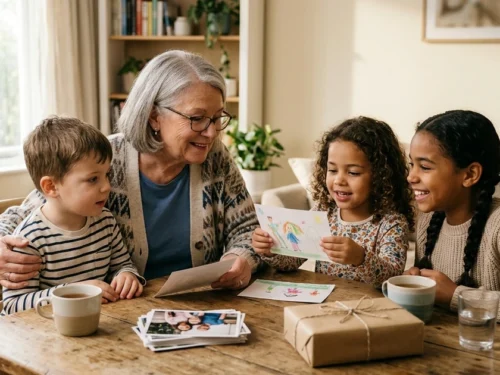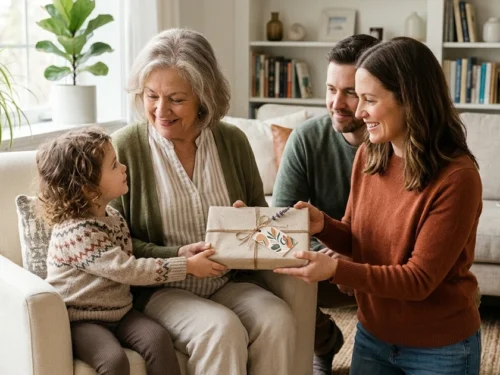

A good gift from children to parents does not need to tell the whole family story. It needs to capture one part of that story clearly enough that the parents immediately know why it was chosen for them.
That might be the children’s names, a photograph everyone remembers, a date that matters, a place connected to the family, or a phrase that has been repeated around the house for years. Once you know what the gift should represent, choosing the actual format becomes much easier.
This approach also works whether the “children” are young kids, teenagers or adult sons and daughters buying for parents who already have most of the things they need.
Start with what you want the gift to say
Before deciding between wall art, clothing, drinkware, a keepsake or another personalized format, finish this sentence:
“We want this gift to remind them of…”
Your answer is more useful than starting with a product category.
It might be:
- all the children they raised;
- a family tradition;
- a funny phrase everyone recognizes;
- a particular birthday or Christmas;
- a house or place connected to family life;
- a moment you still talk about;
- the everyday role a parent has played in the family.
The more specific the answer, the easier it becomes to avoid a gift that simply says “Mom,” “Dad” or “Best Parents” without expressing anything particular about your own relationship.
Personalization works best here as a way to identify the story, not as decoration added after the gift has already been chosen.
For broader relationship-based ideas beyond parents, the Family Gift Ideas for Relationships guide can help you move to the recipient-specific branch that fits your situation.
Decide whether you are gifting one parent or both
A gift for one parent and a gift for both parents serve slightly different purposes.
If the recipient is one parent, you can focus closely on that person’s relationship with the children. A message, memory or name arrangement can reflect the way the family actually speaks to them.
A shared gift for both parents needs a wider frame. Instead of building the idea entirely around “Mom” or “Dad,” consider what the children and parents share as a family: names, a family memory, a place, a tradition or a short message addressed to both.
This distinction matters because a design that feels perfect for one parent can feel awkward when it is simply expanded to include the other.
Ask:
- Is this primarily about one parent-child relationship?
- Or is it about the family the parents built and share?
That answer should guide the wording and personalization.
Choose one family detail to personalize
It is tempting to fit every meaningful detail into one gift. Usually, choosing one strong idea produces a clearer result.
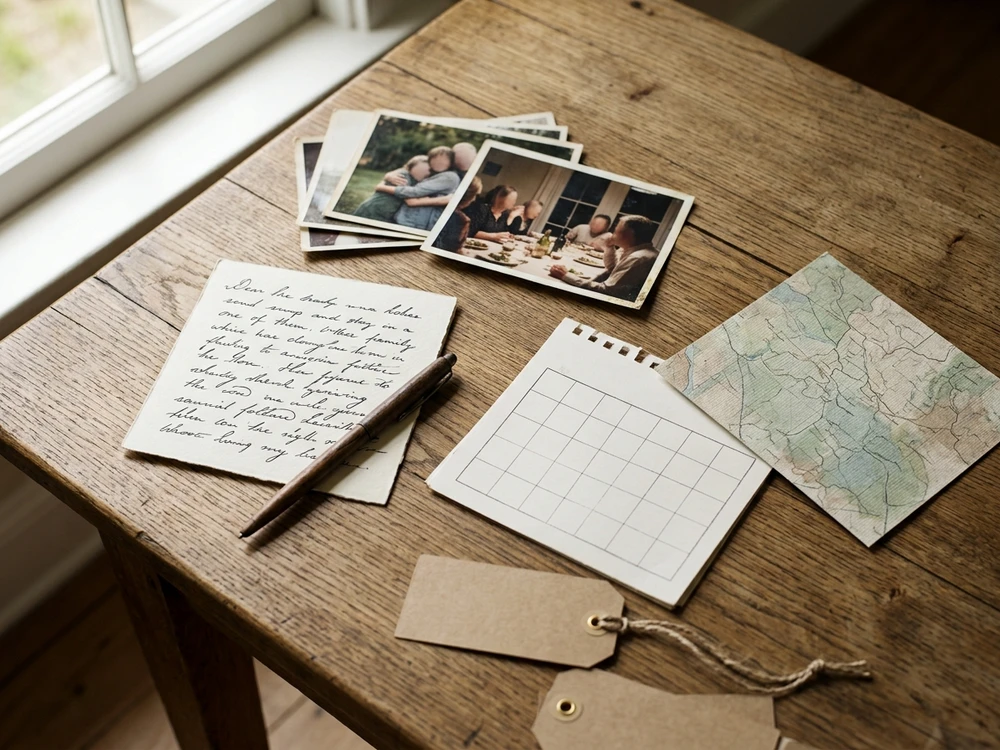
Children’s names
Names are the most direct option when the point of the gift is the relationship between the parent and the children.
They can work especially well when several siblings want the gift to represent everyone equally.
Before ordering, check exactly what the chosen product allows. A design that looks balanced with two names may work differently with five or six, and personalization limits vary by product.
The safest approach is to decide your preferred name order before you start entering information. Check spelling, nicknames and whether everyone agrees on the form each name should take.
A shared memory
A family gift can also be built around a memory rather than a list of names.
Think small and specific:
- a holiday everyone still talks about;
- a recurring family activity;
- something a parent always used to say;
- a photograph with a story behind it;
- a tradition the children still associate with home.
You do not need to explain the entire memory on the gift. Sometimes a short phrase, date, image or place is enough for the family to recognize it.
A meaningful date or place
A date can work when it identifies a real family milestone. A place can work when the location itself carries the meaning—a hometown, family home, holiday spot or somewhere connected to an important chapter.
But avoid adding a date or location simply because the design has room for one.
If removing that information would not change what the gift means, it may not need to be there.
A short family message
A few words can make a gift feel much more specific, particularly when the family has its own wording.
Instead of searching immediately for a generic quote, think about what the children would actually say to the parent.
It could be affectionate, understated or lightly funny. The right tone depends on the family.
A message that sounds natural coming from the children will usually feel more personal than a grand statement that nobody in the family would normally use.
Match the idea to how your parents actually live
Sentimental does not automatically mean decorative.
Some parents enjoy having family pieces on display. Others would rather receive something they can use. Some appreciate a keepsake they can put away and bring out at certain times of year.
The important question is not which category sounds more meaningful. It is which one fits the recipient.
Consider three practical filters.
Will they use or display it?
Think about their home and habits.
If they rarely display decorative items, adding another piece of décor may not be the strongest choice even if the personalization itself is beautiful.
If they enjoy everyday objects with family meaning, a useful format may make more sense.
Does it suit their taste?
Personalization cannot rescue a format the recipient would never choose.
Consider their usual colors, home style, clothing preferences, hobbies and routines before you decide what the family detail should appear on.
Does the family meaning remain clear?
A gift can be practical and still feel personal.
The distinction is whether the customization has a reason to be there. If the children’s names, shared memory or message changes the meaning of the item, the personalization is doing useful work.
If it could be replaced with any generic phrase and feel the same, the idea may need another pass.
Birthday gifts and Christmas gifts need slightly different thinking
The relationship is the same, but the occasion can change the emphasis.
For a birthday
For a birthday, the recipient is usually one specific parent, so the gift can focus more closely on that person’s relationship with the children.
Their role in the family, something the children remember about them, or a message directed specifically to that person can provide a useful starting point.
If your search is specifically about a birthday rather than parent gifting in general, a dedicated guide to personalized birthday gifts for parents from children can go deeper into that occasion.
For Christmas
A Christmas gift can represent the family as a group, particularly when several children are contributing.
Names, a family memory, a year, or something connected to a shared tradition may make more sense than focusing on only one child-parent relationship.
You do not have to make a Christmas gift look overtly seasonal, either. If your parents would value the family meaning throughout the year, an evergreen design may suit them better.
When several children are giving the gift together
A group gift from siblings can become complicated surprisingly quickly.
One person wants a sentimental message. Another wants something funny. Someone wants every name included. Someone else has already chosen a photograph.
Choose one person to coordinate the final details.
Then agree on three things:
- Who is the gift for? One parent or both?
- What family idea should it represent? Names, memory, message, photo, place or another detail?
- Who approves the final wording and spelling?
This prevents the gift from turning into a collection of unrelated ideas.
If several names are being included, confirm the order before checkout. Alphabetical order may feel neutral, but family order or another arrangement may be more natural in your situation. There is no universal rule; consistency matters more.
Do not confuse “personalized” with “more information”
One of the easiest mistakes is to keep adding details because a product has several customizable fields.
More fields do not necessarily create more meaning.
Imagine two versions of a gift.
The first includes six names, three dates, a location, a long quote and several decorative elements.
The second includes the children’s names and the short phrase their parent has used with them for years.
The second may tell the family story more clearly even though it contains less information.
A useful test is to ask what you would notice first if you were the parent receiving it.
If the answer is unclear, simplify.
What to check before ordering a personalized gift
Once you have chosen the idea, move from emotional decisions to practical checks.
Do not assume that every personalized product supports the same options or follows the same policies. Review the current product page before purchasing.
Check:
- the exact personalization fields available;
- spelling and punctuation;
- name order;
- whether your full message fits the stated limits;
- product size and other listed specifications;
- what is and is not included;
- any available preview or mockup information;
- current processing information;
- current shipping information for your destination;
- current returns, replacement or cancellation terms.
If the seller provides a preview, review what it actually shows before relying on it. If no preview is offered, pay extra attention to the entered text and the product description.
Because personalized text is entered for a specific order, a final spelling and wording check matters before checkout.
For a broader pre-order review, use a family gift buying checklist before you submit the order.

A simple way to narrow your choice
If you still have several ideas, score them informally against four questions:
Does it represent something specific about our family?
If the answer is no, look for a stronger personalization angle.
Will this parent actually use, display or keep it?
If you are relying entirely on your own taste, reconsider.
Can the idea be expressed simply?
If the customization needs a paragraph of explanation, the design may be trying to do too much.
Can I verify the product details before ordering?
Personalization, size, materials, processing, delivery and return conditions should come from the current product or policy information—not assumptions.
The strongest option is usually the one that performs well on all four questions, not necessarily the one with the most elaborate design.
Frequently asked questions
What is a meaningful gift from children to parents?
A meaningful option connects the gift to something recognizable in the relationship: children’s names, a family memory, a familiar message, a date, a place or another detail that has genuine significance to the parent.
The format matters less than whether the detail feels specific to that family.
Should all the children’s names be included?
Include all the names when the purpose of the gift is to represent all the children together. If the gift is from one child individually, there is no need to make it look like a group gift.
Always check the available personalization space before choosing the final wording.
Is a sentimental gift better than a practical one?
Not automatically.
A sentimental keepsake works for parents who value display pieces or memory objects. A practical item can be equally thoughtful when it fits the parent’s routine and the personalization has real family meaning.
Choose based on the recipient, not the category.
Can adult children use the same ideas?
Yes. “From children to parents” describes the relationship rather than the giver’s age.
For adult children, shared history can give you more material to work with: family sayings, old photographs, familiar places, traditions and memories that have accumulated over time.
What if I am actually buying for grandparents?
That is a different relationship and deserves its own focus. See Family Gift Ideas from Grandchildren to Grandparents rather than trying to adapt every parent idea into a grandparent gift.
Choose the family detail before the gift format
When you are choosing a family gift from children to parents, start with the detail only your family could supply.
It might be a name. It might be a memory. It might be four words that would mean nothing to anyone outside your household.
That gives the gift its reason for existing.
From there, look for a format that suits the parent’s taste and everyday life, and verify the current personalization and ordering details before committing.
If you want to compare more family gift ideas before narrowing by relationship, the broader Pillar guide can help you reset the choice. If the relationship is already clear, continue with Family Gift Ideas for Relationships and choose the recipient-specific direction that fits.
The goal is not to find the most personalized product possible. It is to choose a gift where the personalization actually means something.