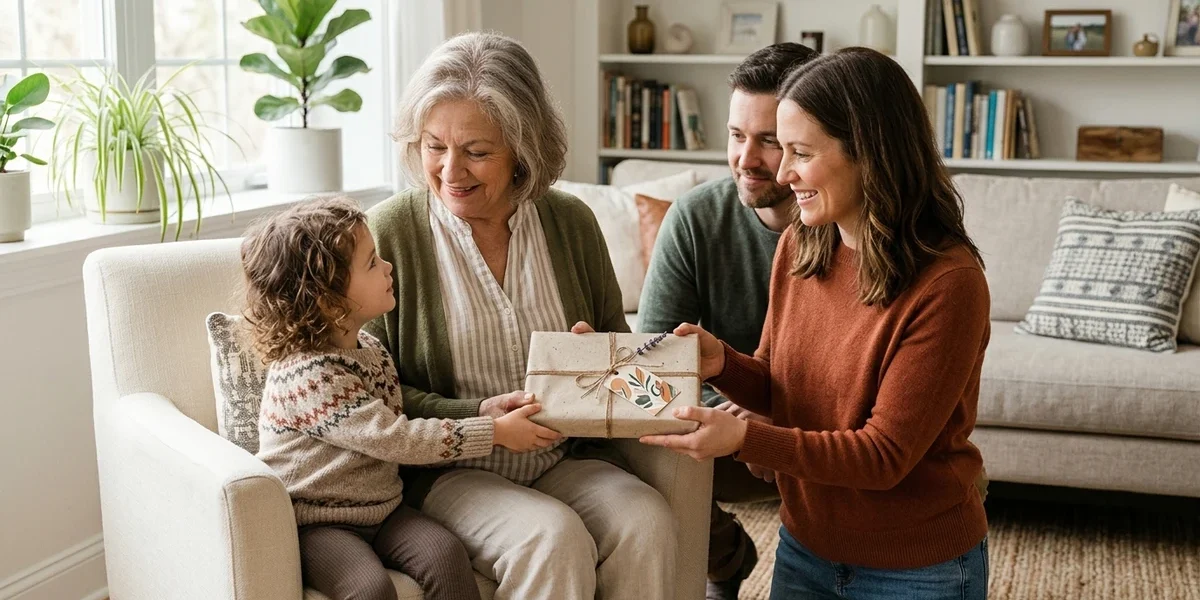
A personalized Mother’s Day gift for Grandma does not need to include every possible family detail to feel special. Usually, the strongest idea starts with one simple question: what do you want the gift to remind her of when she sees or uses it?
Maybe the answer is her grandchildren’s names. Maybe it is the way your family has always addressed her. Maybe it is a short sentence she has heard from you many times before.
Once that part is clear, choosing the actual gift becomes much easier.
Instead of starting with a long list of products, start with the relationship. Then decide how much personalization the gift needs and where it should fit into Grandma’s everyday life.
Start with what should make the gift personal
A Mother’s Day gift can be customized in many ways, but more details do not automatically make it more meaningful.
Think first about what you want Grandma to notice.
If the strongest part of the gift is who it comes from, names may be enough.
If the strongest part is what you want to tell her, a short message may carry more meaning.
If both matter, you can combine them, provided the design still feels clear rather than crowded.
This gives you a useful filter before you start browsing.
For example, a grandmother who loves seeing the whole family represented may appreciate a design centered on names. A grandmother who values handwritten notes and personal conversations may respond more naturally to a short message. Another may prefer something much quieter: her familiar family title and one small line underneath it.
The aim is not to put everything you know about her onto one item. It is to choose the detail that feels most like her.
If you are still deciding among broader Grandma gift directions before narrowing the idea to Mother’s Day, the Grandma and Grandmother Gift Ideas guide is the better place to compare those possibilities.
Names, a message or both?
Choosing the personalization is often more important than choosing between two similar gift formats.
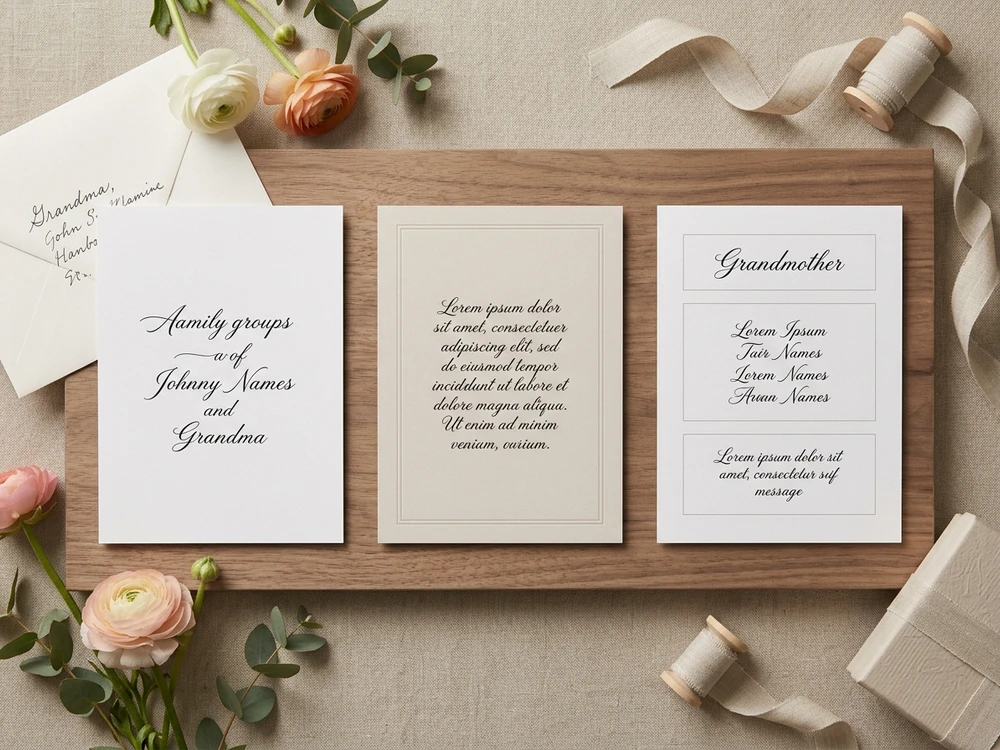
Choose names when family connection is the main story
Names work especially well when the gift is meant to represent a family group.
That could mean grandchildren, children and grandchildren together, or another group that Grandma immediately understands as part of her family story.
Before using a long list, though, ask whether every name adds something useful to the design. If a gift becomes difficult to read or visually busy, simplifying may make the personalization feel more intentional.
You also do not need to assume that every Grandma gift must come specifically from grandchildren. If that is the real intent of the gift, the broader guide to personalized gift ideas for Grandma from grandchildren can explore that relationship in more depth.
For this Mother’s Day article, the key point is simpler: use names when the people represented are the central meaning of the gift.
Choose a message when your relationship is the main story
A short message can work better when the gift is about gratitude, affection or a shared memory rather than a family roll call.
It does not need to sound like greeting-card copy.
In fact, wording often feels more personal when it sounds like something your family would actually say.
Consider the difference between a generic superlative and a specific thought.
“Best Grandma Ever” may suit some families perfectly.
For another family, a line such as “Thank you for always making room for us” may feel much closer to the relationship.
For another, even that may be too formal. A familiar sign-off or family phrase may be enough.
A useful test is to read the wording aloud. If you would never say it to her, reconsider it.
Combine names and a message when the design has room to breathe
Names and a message can work together, but they should have different jobs.
The names can show who the gift represents.
The message can explain why those people are celebrating her.
For example, a design might use her familiar family title as the main element, a short list of names as supporting information and one brief Mother’s Day message underneath.
What matters is hierarchy.
If the title, six names, a date, a quotation and a long dedication are all competing for attention, the result may feel more like a form that has been filled in than a gift designed for one person.
When in doubt, remove the least important element.
Match the gift to how Grandma actually lives
Once you know what the personalization should communicate, choose a format that fits her.
A useful way to narrow the options is to decide whether she would prefer something for everyday use, something intended for display, or a keepsake tied to a memory or milestone.

Everyday-use gifts
An everyday item can be a good fit for someone who prefers useful things over decorative keepsakes.
The personalization should still make sense in daily use. A name, familiar title or short phrase may work better here than a long message that needs to be read like a card.
Ask:
- Is this the kind of item she already uses?
- Would the personalization still feel natural several months after Mother’s Day?
- Is the design readable without demanding attention?
The gift does not have to announce the occasion forever. Mother’s Day can be the reason you give it without becoming the only thing the design says.
Home-display gifts
A display piece gives you more room to represent family relationships, names or a message.
Before choosing one, think about Grandma’s home rather than your own design preferences.
Does she already display family photos and keepsakes?
Does she prefer simple décor or more decorative pieces?
Would she enjoy having the item visible, or would something intended for daily use fit her better?
The most personal choice is not necessarily the one with the most elaborate artwork. It is the one that belongs naturally in her space.
Keepsakes for a specific memory or milestone
A keepsake is strongest when it has a clear reason to exist.
Perhaps this is her first Mother’s Day after becoming a grandmother. Perhaps the family has changed since last year. Perhaps there is a phrase, family moment or new name that makes this year distinct.
You do not need a milestone to give a keepsake, but when one exists, let it guide the personalization.
That gives the object a story beyond “we bought this for Mother’s Day.”
Make Mother’s Day part of the personalization
There are two ways to personalize for an occasion.
One is to write the occasion directly into the design.
The other is to make the wording feel appropriate for the occasion without permanently labeling it.
Both can work.
A gift that says “Happy Mother’s Day” makes the occasion unmistakable. That may be exactly what you want for a commemorative keepsake.
A more evergreen design might use her name, family title or meaningful phrase, while the card or accompanying note carries the Mother’s Day message.
Neither approach is automatically better.
Ask whether you want the gift to preserve this particular Mother’s Day or remain part of Grandma’s everyday life without an occasion label.
That single decision can remove a surprising amount of indecision.
Keep the wording personal without trying too hard
You do not have to invent a profound family quotation.
Begin with language that is already part of your relationship.
What does everyone call her?
What does she call the grandchildren?
Is there a phrase she says often?
What do you genuinely appreciate about her?
If she has always been Nana, do not switch to Grandma merely because a sample design uses it.
If your family calls her something else entirely, use that when the product supports the wording you need.
You can then keep the message simple.
A useful structure is:
Her familiar name or title + one true thought + who it comes from
Nana
Thank you for making ordinary days feel special.
Love, Mia and Theo
Or:
Grandma
So much of our family story starts with you.
Love always, Sam
These are examples of structure, not required wording. The strongest version will usually use language specific to your own family.
If you need to decide between Grandma, Nana, Granny or another title before you personalize the design, that question deserves its own guide rather than a long detour here.
Do not confuse more personalization with better personalization
Personalized gifts can become cluttered because every available field feels like an invitation to add something else.
Try giving each detail a reason.
A name identifies a person.
A date marks a moment.
A short message expresses a thought.
A title establishes the relationship.
If two or three details are doing the same job, you probably do not need all of them.
This is particularly important when several family members are involved. A long list of names may be meaningful, but only if the chosen product or design can present them clearly.
Because personalization limits and layouts vary by actual product, always check the current product page rather than assuming that a design can support a particular number of names or length of message.
Check the family details before you order
A personalized Mother’s Day gift deserves one last quiet review before checkout.
Read every entered detail from the beginning rather than glancing at what you remember typing.
Check:
- Grandma’s preferred name or family title
- every person’s spelling
- the order of names, if order matters
- punctuation and capitalization
- the final message
- any date you chose to include
- the product description and what is actually included
- the personalization fields supported by that specific item
- current processing and delivery information
- current return, correction or cancellation terms
Do not assume that policies or timelines are the same across personalized products.
If the gift needs to arrive for a particular Mother’s Day celebration, use the current information shown for the actual product and destination at the time you order.
A beautifully worded gift is still frustrating if a misspelled name reaches the final design.
A simple way to choose your Mother’s Day gift for Grandma
If you have several ideas open and cannot decide, reduce the choice to four questions:
- What should Grandma feel reminded of?
A person, the whole family, a memory or a message? - What kind of personalization expresses that best?
Names, a short message or both? - Where will the gift fit into her life?
Daily use, home display or keepsake storage? - Can the actual product support the design cleanly?
Check the current personalization options and product details before ordering.
That sequence keeps the relationship ahead of the product.
The physical item is only the format. The part that makes it feel chosen for Grandma is the connection between the object, the wording and the way she will actually use or see it.
If you want to compare broader options first, continue with the Grandma and Grandmother Gift Ideas guide. Once you have narrowed the direction, explore a relevant personalized Grandma gift whose current personalization fields allow you to say exactly what you want without forcing extra details into the design.