

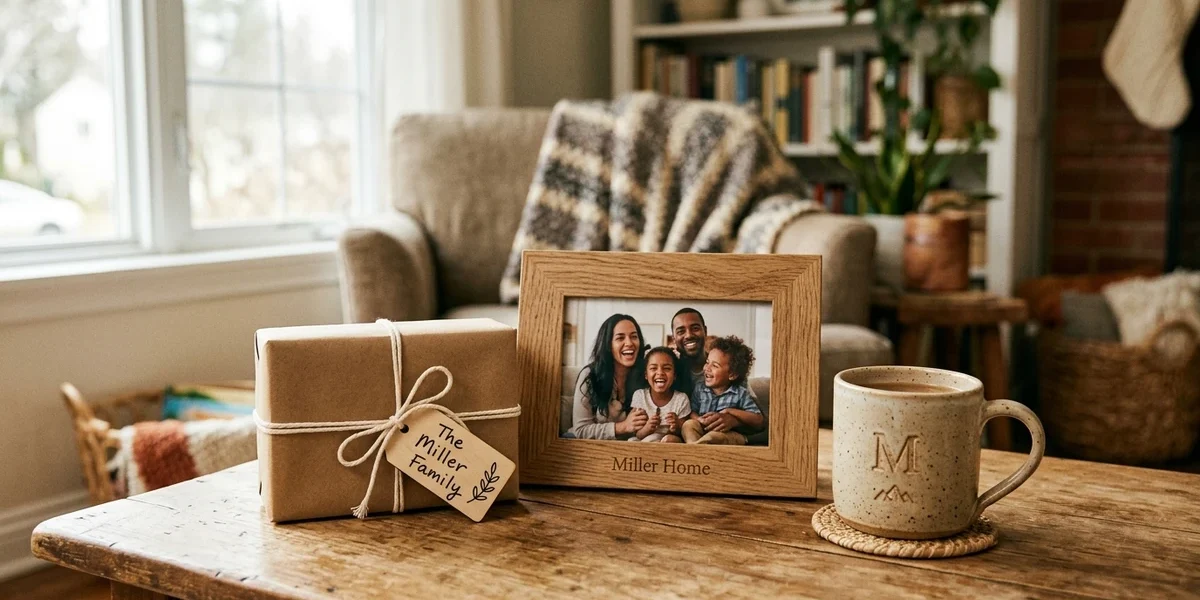
A personalized family gift does not need layers of customization to feel thoughtful. If you are working within a budget, the better question is not “How much personalization can I add?” but “Which detail will make this feel clearly chosen for them?”
Often, one meaningful element—a name people actually use, a family name, an important date or a short shared phrase—can do more than a complicated design filled with details that do not matter to the recipient.
That makes affordability less about finding the lowest possible sticker price and more about spending on the parts of the gift that carry meaning.
Affordable does not have to mean impersonal
A lower-cost gift can still feel specific to the person or family receiving it.
Think about two otherwise similar gifts. One was chosen because it happened to fit the budget. The other reflects the recipient’s name, household, relationship or a memory you share.
The second can feel more intentional even if the physical gift itself is simple.
For budget-conscious shopping, that gives you a useful rule: personal relevance should do more of the work than added complexity.
Before looking at dozens of options, decide what you want the gift to say.
Is it:
- “This belongs to our family”?
- “I appreciate you”?
- “This marks an important year”?
- “This reminds me of something we share”?
- “I chose this specifically for the way you live”?
That answer is more useful than beginning with a product category.
Start with one detail that actually matters
Personalization can become expensive or visually busy when every possible detail gets added simply because it is available.
Start smaller.
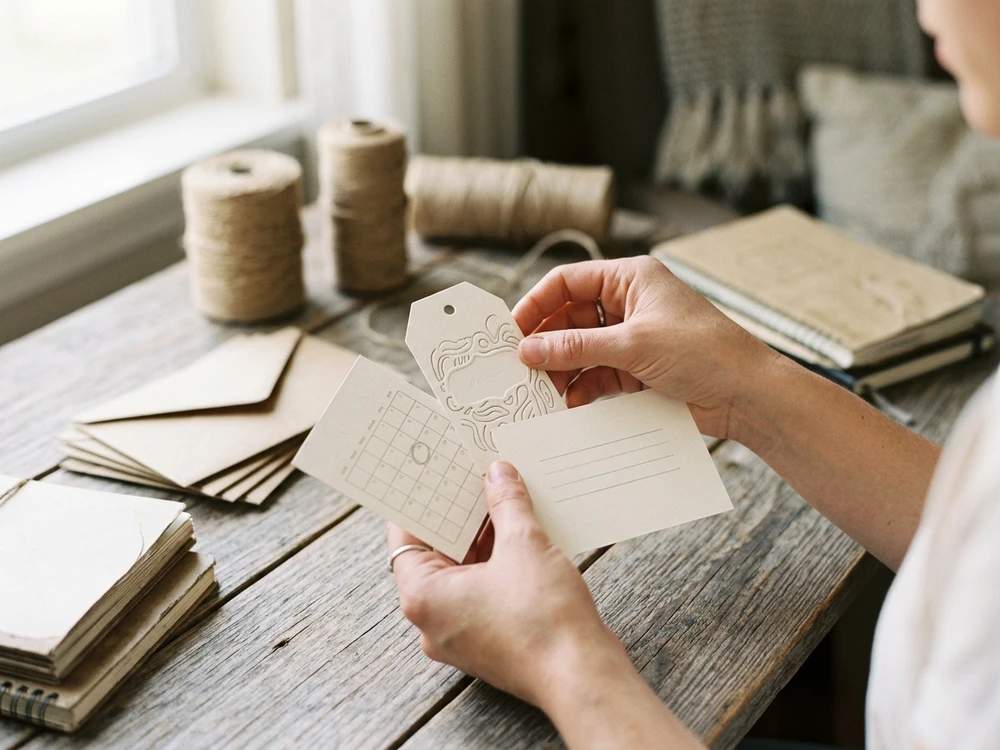
Use the name people really use
For many family gifts, a name is the clearest starting point.
That might be a first name, family surname or familiar family title. What matters is that the wording feels natural to the recipient.
If everyone calls your grandmother “Nana,” for example, using a more formal title simply because it looks conventional may make the gift feel less personal.
The same principle applies to chosen family, blended families, same-sex parents, grandparents who are caregivers and households that include pets. Use the names and roles the family actually uses.
Before ordering, check that the particular product supports the wording and number of names you need.
Choose a shared detail only when it adds meaning
A date, location or short phrase can work well when there is a clear reason for including it.
A couple might care about an anniversary date. A household may identify strongly with a family name or shared place. Siblings may appreciate a phrase connected to a long-running family joke.
But not every gift needs a name, date, location and quotation at once.
When budget is part of the decision, choose the detail that carries the story rather than adding customization simply to make the gift look more elaborate.
Match the gift to who will actually use it
An affordable gift is not good value if it does not fit the recipient.
Before comparing products, decide whether you are shopping for one person, a couple or an entire household.
For one family member
A gift for one person can focus closely on that person’s role, name, routine or interests.
For a parent or grandparent, the most meaningful detail might be the names of children or grandchildren—but only if the chosen product genuinely supports that type of personalization.
For a sibling or chosen-family member, their own name or a shared phrase may feel more natural.
For a couple or household
One personalized gift for a household can sometimes make more sense than trying to find several separate gifts.
The important question is whether the gift represents the people receiving it appropriately.
A couple may prefer their names together. A household may prefer a family name. A blended or chosen family may want individual names rather than a single surname.
There is no universal format. The best wording is the one that reflects how that household describes itself.
For a larger family group
When several people need to be represented, complexity rises quickly.
Before placing an order, check how many names or characters the design actually supports. Do not assume that a product can accommodate a large household simply because it is marketed as a “family” gift.
If the design becomes crowded, simplifying the personalization may give you a cleaner and more useful result.
Affordable personalized family gift directions
You do not need a giant product list to build a good shortlist. Start with the role you want the gift to play.
| Gift direction | Personal detail to consider | Works well when… | Check before ordering |
|---|---|---|---|
| Name-focused gift | First name, family name or familiar role | One simple detail is enough to make the item personal | Supported text and spelling |
| Shared household gift | Family name or household names | Several people will enjoy one gift together | Number of names and design layout |
| Everyday-use gift | Name or role | The recipient prefers something useful rather than display-only | Product details, size and care information |
| Occasion keepsake | Name plus relevant date | A birthday, Christmas or milestone deserves a marker | Date format and personalization fields |
| Shared-memory gift | Short phrase or meaningful wording | The recipient will understand the reference immediately | Character limits and wording accuracy |
These are directions, not claims about a particular store’s current catalog. Always confirm what the individual product actually allows.
Set the real budget before you shop
If affordability matters, decide your maximum complete spend before browsing.
Then compare the whole purchase, not only the first price you see.
Depending on the store and order, personalization choices, quantity, shipping and other checkout charges can affect what you actually pay.
A simple approach is to separate your budget into two categories:
Must-have:
The gift itself and the personalization detail that gives it meaning.
Nice-to-have:
Extra customization, upgraded formats, add-ons or other elements that do not change the basic message of the gift.
If a nice-to-have pushes the order beyond your intended budget, remove that before abandoning the personal detail that made the gift special.
This also makes comparison easier. Two items with similar starting prices can lead to different final totals once you configure them.
Spend attention where it has the most impact
Budget-friendly gifting becomes easier when you stop trying to make every part of the gift special.
Choose one or two areas to care about deeply.
For example:
- Get the recipient’s preferred name exactly right.
- Choose a format they will realistically use or display.
- Make the message specific rather than generic.
- Check the design carefully before ordering.
- Leave enough ordering time rather than relying on an unverified last-minute delivery assumption.
That combination can be more useful than paying for extra design complexity that the recipient may never notice.
Know when a different gift guide will help
Affordability can overlap with other buying questions, but those questions deserve their own decisions.
If your priority is keeping the physical gift compact, the guide to small personalized family gifts with a big emotional meaning can help you focus on size without turning “small” into a synonym for “cheap.”
If you want the gift to earn a place in someone’s normal routine, explore personalized family gifts for everyday use rather than choosing solely by price.
And if you are stuck between something sentimental for display and something practical, the deeper keepsake or practical family gift comparison is a better place to make that choice.
For the broader picture, the parent guide on family gift ideas by budget and use case can help you compare these directions before narrowing the shortlist.
Birthday and Christmas gifts need slightly different thinking
The same affordability principles apply to both birthdays and Christmas, but the buying context changes.
For a birthday
You are usually choosing for a specific recipient, so personal relevance can be very focused.
A familiar name, role, important year or detail connected to the person may be enough. There is less reason to make the design represent everyone unless the recipient values that family connection.
For Christmas
You may be shopping for several people at once, or you may want one gift that represents a household.
That makes it especially useful to decide early whether you are giving individual gifts or one shared family gift.
Christmas also adds a timing question. Personalized items can involve production before shipment, so check the current product and shipping information rather than relying on a generic holiday-ordering rule.
Do not assume an item will arrive before Christmas unless the seller provides current information that supports that expectation.
Avoid the false economy of choosing only by price
The lowest-priced option is not automatically the most affordable choice for you.
A gift can become poor value when:
- the recipient is unlikely to use it;
- the personalization feels generic;
- important names are missing;
- the design is too crowded to read comfortably;
- the product format does not suit the recipient;
- you need to replace it because the personalization was entered incorrectly;
- extra charges make the final order substantially different from what you expected.
Price matters. So does avoiding a purchase that does not solve the gifting problem.
A useful gift within budget is generally a better target than simply choosing the cheapest item you can find.
Check these details before you order
Once you have a shortlist, slow down for one final review.
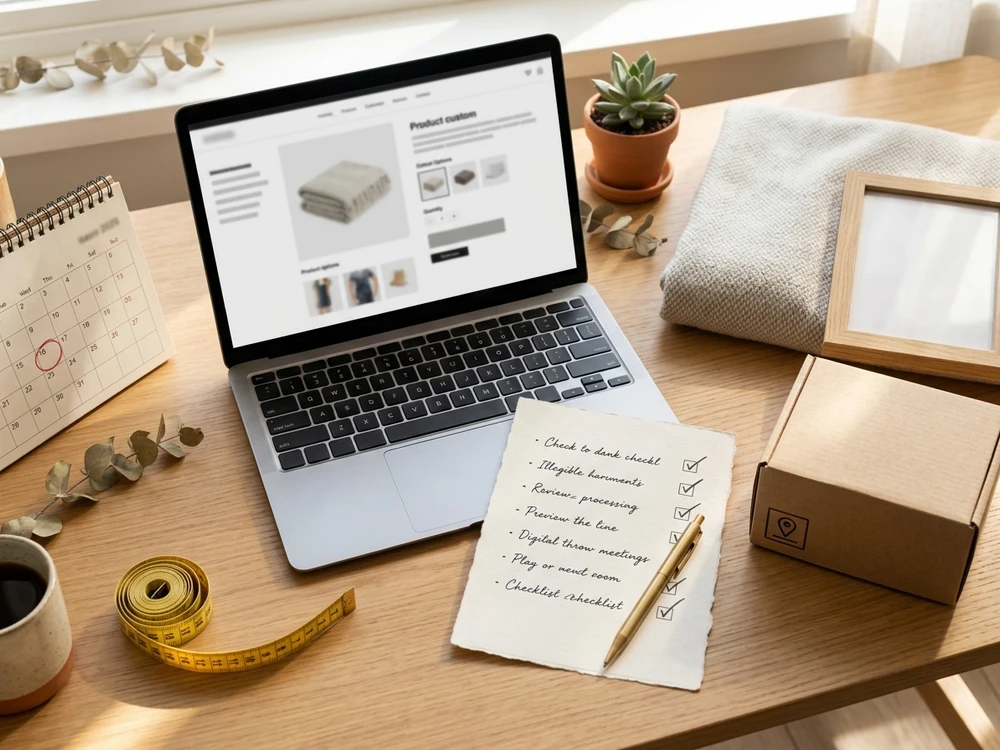
1. Check every name and word
Verify spelling, capitalization, punctuation and dates.
Do not type important personalization details from memory if you can check them first.
2. Confirm what can actually be personalized
Confirm the personalization fields available for the exact product or variation you select.
Do not assume that examples shown elsewhere apply to your chosen configuration.
3. Check the actual product details
Look at the listed size, format, materials, included items and care information when those factors matter to your decision.
Avoid filling in missing information with assumptions.
4. Check the final cost
Review the configured item and checkout total rather than relying only on the initial displayed price.
5. Check processing and delivery information
This matters especially for birthdays and Christmas.
Personalized orders can involve production before shipment. Use the current information provided for the specific order rather than assuming a general timetable.
6. Check return, correction and cancellation terms
Personalized items can be treated differently from standard products, and policies vary.
Read the current terms before purchasing, particularly when spelling, dates or other customer-entered details are involved.
A simple way to narrow your shortlist
If you still have too many ideas, use four questions:
- Would they understand why this was chosen for them?
- Will they realistically use, display or keep it?
- Can I personalize it accurately without unnecessary complexity?
- Does the complete order fit the amount I actually want to spend?
A gift that passes all four questions is usually a stronger candidate than one chosen only because it has the biggest discount label or the longest list of customization options.
Frequently asked questions
What makes a personalized family gift feel meaningful without spending a lot?
Specificity helps. A familiar name, family name, date or short message can make a simple gift feel intentionally chosen. Focus on a detail the recipient understands rather than adding as many custom elements as possible.
Is one personalized gift for the whole family a good budget option?
It can be, especially when the gift genuinely suits the household as a group. Check whether the wording represents everyone appropriately and whether the item is something they would enjoy together.
Should I choose a practical or sentimental gift?
That depends on the recipient. Someone who values daily usefulness may prefer a practical format, while another person may care more about a keepsake connected to a memory or milestone. If that is your main dilemma, use a dedicated keepsake-versus-practical comparison rather than deciding on price alone.
How do I know whether a personalized gift is really affordable?
Look at the complete configured order rather than only the initial item price. Decide your total budget first, then check personalization choices and the final checkout amount before buying.
What should I verify before ordering a personalized gift?
Check spelling, personalization fields, product details, final cost, current processing and shipping information, and current return or correction terms. For time-sensitive occasions, verify current delivery information instead of assuming an arrival date.
Make the personal detail do the work
You do not need the biggest gift or the most complicated design to make a family gift feel thoughtful.
Start with the recipient. Choose one detail that genuinely belongs to them. Pick a format that fits their life. Then check the complete order against the amount you intended to spend.
That approach keeps the gift personal without turning affordability into a race to find the lowest price.
Once you know which detail matters most, browse personalized family gift options that fit that role, then verify the current personalization, product, checkout, delivery and policy information for the exact item you choose.