
Shopping for someone who already has everything can make a simple birthday or Christmas gift surprisingly difficult.
They may already own the useful things, buy what they want for themselves and insist that they “don’t need anything.” In that situation, searching harder for an object they somehow missed is rarely the most useful starting point.
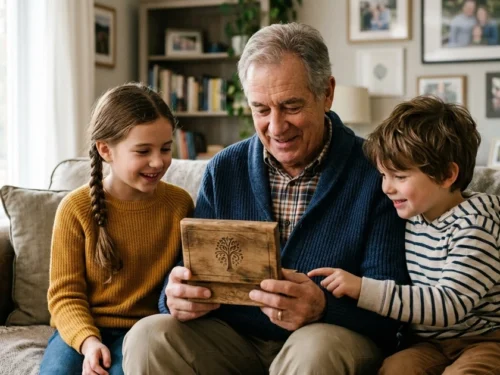
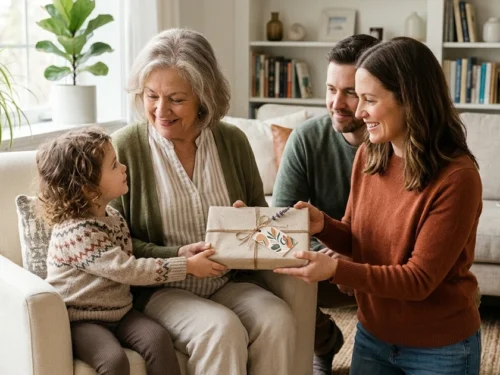
Instead, look for something a generic shopping list cannot know about them: a family memory, familiar name, shared phrase, meaningful place or small detail that belongs to your relationship.
For a parent, grandparent or other close family member, that personal connection can give you a much clearer gift direction than novelty alone.
Why “more stuff” is usually the wrong starting point
Someone who “has everything” probably does not literally own everything. They simply have enough that another random possession may not add much.
Personalization can help, but only when it adds genuine relevance.
A 2018 qualitative study of gift recipients found that people could value personalized gifts both for the product’s utility and for the way the personalization expressed something about the giver.
That does not mean putting a name on any object automatically makes it thoughtful. The detail still needs to fit the recipient and your relationship with them.
Start with the person. Then decide what form the gift should take.
Five family gift directions for someone who already has plenty
These are not a catalogue of Printwonder products. They are gift formats and ideas you can evaluate before checking what a particular retailer currently offers.
1. Turn one family memory into a keepsake
Choose one memory instead of trying to summarize an entire relationship.
It might be a family trip everyone still talks about, a first Christmas in a new home, a wedding, a reunion, a childhood tradition or an ordinary Sunday ritual that somehow became part of family life.
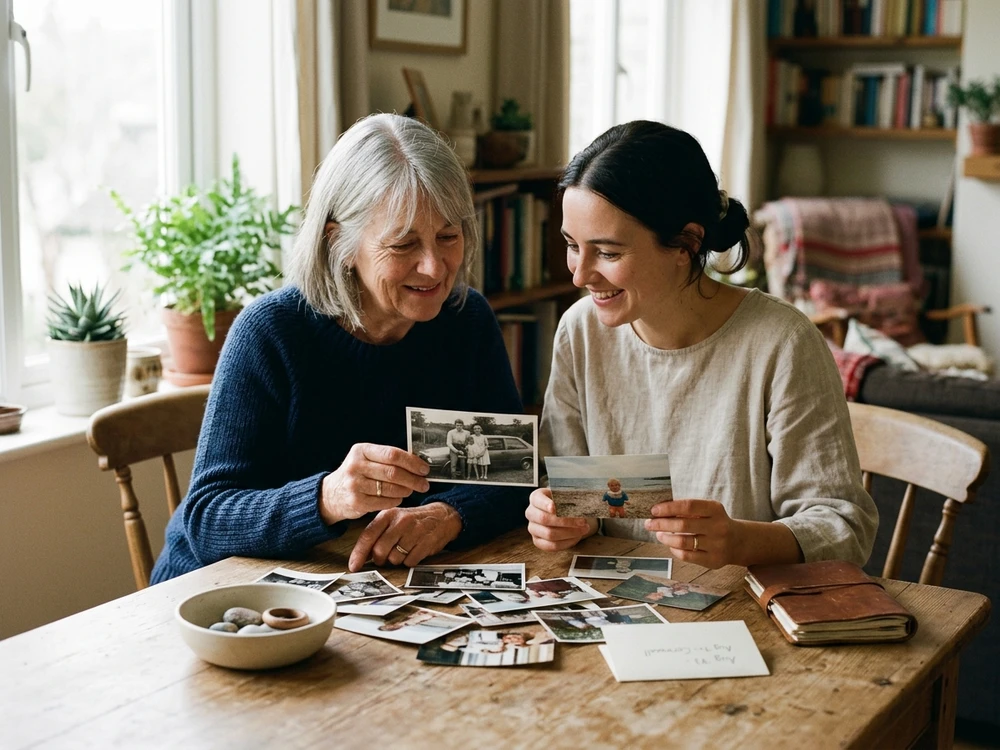
From there, you could explore formats such as a photo book, framed image, personalized print, small memory collection or another keepsake that can appropriately support the detail you want to preserve.
What matters is recognition. The recipient should understand why you chose that memory without needing a long explanation.
If you have dozens of possible moments, ask which one still comes up naturally in conversation. That is often a stronger choice than simply selecting the most formal milestone.
2. Build the gift around family identity
For someone who already owns the usual gifts, a name or role can be meaningful because it represents belonging.
That might be a family surname, the names of household members, a familiar grandparent title, initials shared by a couple or a phrase your family actually uses.
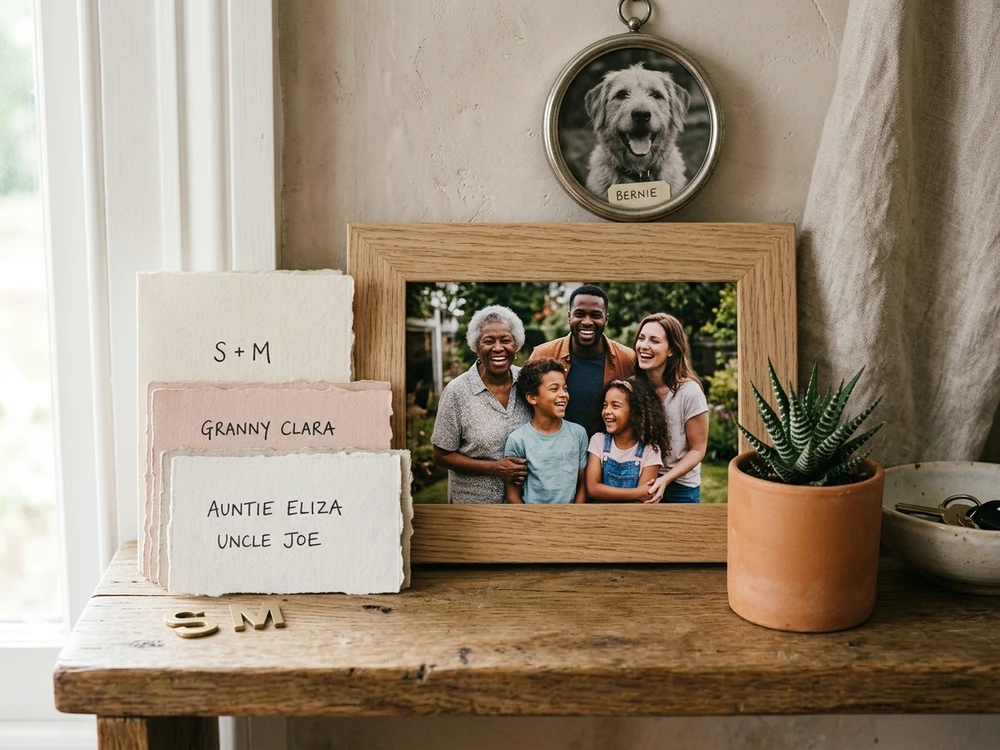
Possible formats to evaluate include personalized family artwork, name-based décor, a custom illustration or another item designed around family identity.
Keep the personalization selective. Adding every available name, date and quote can make the idea feel busier rather than more personal.
This approach can work across many kinds of families, including single-parent and blended families, adoptive families, same-sex parents, grandparents as caregivers, chosen families, couples without children and households where pets are an important part of everyday family life.
3. Personalize something that suits an existing habit
Some people enjoy keepsakes. Others do not want another object sitting on a shelf.
If your parent or grandparent prefers practical gifts, start with what they already use rather than trying to turn them into a collector of sentimental items.
Depending on their habits, you might evaluate an everyday-use item, something connected to a hobby, an item for a familiar part of the home or another practical format that can carry subtle personalization.
The useful order is:
habit first, personalization second.
A beautifully customized item still misses the mark if the recipient would never normally use that kind of thing.
The same principle applies when someone has explicitly told you what they want. Five gift-giving studies found that recipients appreciated requested gifts more than givers tended to expect.
A request does not make the gift less thoughtful. Listening can be part of the thoughtfulness.
4. Pair an experience with a small personal reminder
People who already own plenty may value time or an experience more than another substantial possession.
Research comparing experiential and material gifts found that experiential gifts produced greater improvements in relationship strength in the studied gift exchanges.
That does not mean experiences are always the right choice for everyone. It gives you another useful option.
You might plan a family meal, outing, class, short trip or activity the recipient would genuinely enjoy, then pair it with a small personalized reminder connected to the day.

The physical gift no longer has to carry the whole occasion. Its job is simply to hold the memory afterwards.
5. Make the message the most important part
You do not always need complicated customization.
Sometimes a short, specific message is what separates a personal gift from a generic one.
Compare:
“You’re the best.”
with:
“Thank you for making Sunday lunch the place everyone still comes back to.”
The second line belongs to a particular relationship.
Think about a familiar saying, a small act you appreciate, an inside joke or something the recipient has done for the family over many years.
Then choose a gift format that gives that message an appropriate place to live.
Use the “has-everything” filter
Before ordering, run the idea through five questions.
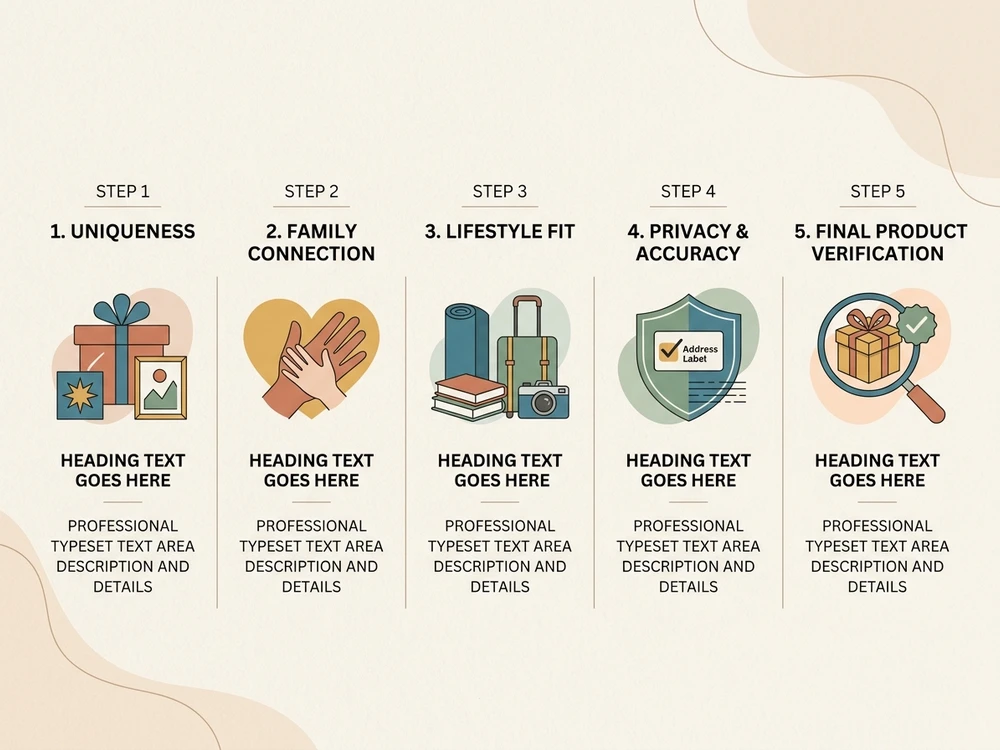
Would a generic substitute lose the point?
If you could replace the name, memory or message and give exactly the same gift to almost anyone, the idea may still be too generic.
Does it connect to something real?
Use an actual relationship, memory, family role, date, place or phrase. Avoid sentimental wording that sounds impressive but has little connection to the recipient.
Does the format fit their life?
Think about space, style and habits.
Someone with a carefully uncluttered home may not want another large decorative piece. Someone who loves family photographs may enjoy a display-oriented gift much more.
Is the personalization accurate and appropriately private?
Check spelling, names and dates carefully.
Use only the personal information necessary for the design. Avoid unnecessary private addresses, sensitive personal details or photos you do not have permission to use.
Have you checked the current product details?
Before ordering, verify the actual product page.
Personalization options, production details, delivery estimates, correction procedures and return rules can vary. Do not assume that one personalized product works the same way as another.
Gift ideas for parents who have everything
For a parent who buys what they need themselves, look beyond their shopping habits.
What do they keep?
What do they talk about?
What family routines matter to them?
A parent who saves photographs may appreciate a memory-led gift. A parent who dislikes clutter may prefer an experience or a practical item with restrained personalization. Someone strongly attached to a family tradition might value a gift built around the words, names or date associated with it.
Avoid treating “parent” as the whole personality. Their habits and preferences should shape the format; the family connection gives it meaning.
Gift ideas for grandparents who have everything
With grandparents, the temptation is often to include the entire family history in one gift.
You usually do not need to.
One strong detail may be enough: the names of grandchildren or household members, a familiar grandparent title, one important photo, a date with real meaning or a place that connects several generations.
If several relatives are contributing, decide what the gift is actually celebrating before everyone starts adding ideas.
Is it about the grandparent’s relationship with the whole family?
A particular tradition?
One shared memory?
A focused story is easier to recognize than a design trying to represent every chapter at once.
Birthday and Christmas gifts need different emphasis
The gift format does not always have to change with the occasion. The story behind it can.
For a birthday, the emphasis can stay close to the individual: a personal memory, family role, interest or chapter in their life.
For Christmas, shared family traditions, household identity and memories from the year may feel more natural.
That distinction can help when you have a good personalization idea but are unsure how to make it suit the occasion.
What to avoid when they already have plenty
Personalization for its own sake. A name does not make an unsuitable product useful.
Trying too hard to surprise them. If they have clearly asked for something, you do not have to outsmart the request.
Giving them a storage problem. Think about where a physical gift will realistically live.
Overloading the design. One meaningful memory can be stronger than six names, four dates and three quotations competing for attention.
Using private information unnecessarily. Meaning does not require sensitive personal details.
Assuming every product can be customized in the same way. Check the actual item before planning around a specific photo, number of names, message length or other feature.
How to narrow several good ideas
If you still have three or four possibilities, ask one question:
Which idea depends most on knowing this particular person?
Maybe the answer is a family joke that would sound meaningless to anyone else.
A photo from a quiet moment rather than a major event.
The nickname grandchildren use.
A location that immediately brings back a family story.
Or a practical gift connected to a routine you have watched for years.
For someone who already owns plenty, that specificity is often more useful than searching for something increasingly unusual.
For broader inspiration around names, memories and milestones, the related meaningful family gift ideas guides can help you explore the wider territory without turning this decision into an endless product search.
Frequently Asked Questions
What do you give someone who says they do not want anything?
Take the comment seriously. They may prefer time together, an experience, something consumable, a requested item or simply a smaller gift. You do not need to create a large physical present to prove that you care.
What makes a personalized gift feel thoughtful instead of generic?
The personal detail should come from something real: a relationship, family role, accurate memory, meaningful date, shared phrase, name or other detail that makes sense for that recipient.
The product is the format. The specific connection is what makes the idea personal.
Are personalized gifts a good choice for parents or grandparents?
They can be when the personalization reflects the person and the format suits their preferences. A personalized keepsake may suit someone who treasures family mementos, while a practical or experience-led direction may suit someone who dislikes collecting things.
What if I need the gift by a particular date?
Check the current retailer or product page before ordering. Production and delivery information for personalized items can vary, so avoid assuming a timeline based on a different product or previous order.
Does an expensive gift work better for someone who has everything?
A higher price does not automatically solve the “has everything” problem. Start with recipient fit and personal relevance, then choose a budget and format that make sense for you.
When someone already has most of what they need, you do not have to find the one object they have somehow missed.
Find the detail a generic gift guide cannot know.
A memory. A name. A role. A phrase. A place.
Then choose a format that genuinely fits the person receiving it.
That is a much stronger place to begin.